|
|
|
Blast fishing
|
 |
|
|
|

|
In both Sabah and Indonesia, fishing boats can be divided into three main types: |
|
| one-man, one-boat operations which operate over a very small area | |
| medium scale operations that have larger boats with a crew of 3-5 but are still restricted to reefs within a one-day radius | |
| large-scale operations that have boats with living and sleeping facilities and with up to 20 fishers per boat; they make trips lasting several days and cover large areas | |
|
Many larger boats collect the fish using "hookah" compressors with long air hoses supplied to divers working underwater.
|
|
Fishing boats preparing for sea and loading with fertilizer are common in villages close to Kota Kinabalu, Sabah. Fishers from the Philippines purchase fertilizer, diesel and kerosene in Kudat, North Sabah, en route to their blast fishing sites in the Philippine Spratley Islands. From Zamboanga City in the southern Philippines, boats travel on 4-6 week trips blasting at all reefs with sufficient fish .
|
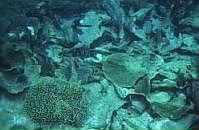
Boats from all the coastal towns in Sabah do the same! Blast fishers from Sandakan were watched as they systematically destroyed a remote offshore reef at a rate of 15 bombs per hour. Not surprisingly, there was only a large rubble pile left instead of a coral reef after this attack. |
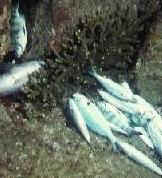
As they floated to the surface, the dead fish were collected by 12 small boats equipped only with dip nets. Most often, dead fish that sink to the bottom and are out of reach of the dip nets are simply left to rot on the seabed.
DEAD FUSILIERS LEFT TO ROT ON THE SEABED AFTER BLAST FISHING
|
||
Observations like this reinforce the views of the local fishers who believe they have no option but to continue to blast when their reefs are subject to severe damage from wide ranging, larger boats. |
||||
|BLAST FISHING| |BLAST FISHING FREQUENCY| |ECONOMICS| |BLAST FISHING REGULATIONS| |EFFECTS ON BIODIVERSITY|
|EFFECTS ON CORAL REEFS| |ECOTOURISM PROTECTION|